New Patients Accepted (954) 966-6410
Cosmetic dental bonding uses tooth-colored composite resin to make targeted improvements to the shape, color, or surface of a tooth. It can be an effective option when a tooth has a small chip, an uneven edge, a minor space, or another localized cosmetic concern that does not require a porcelain restoration.
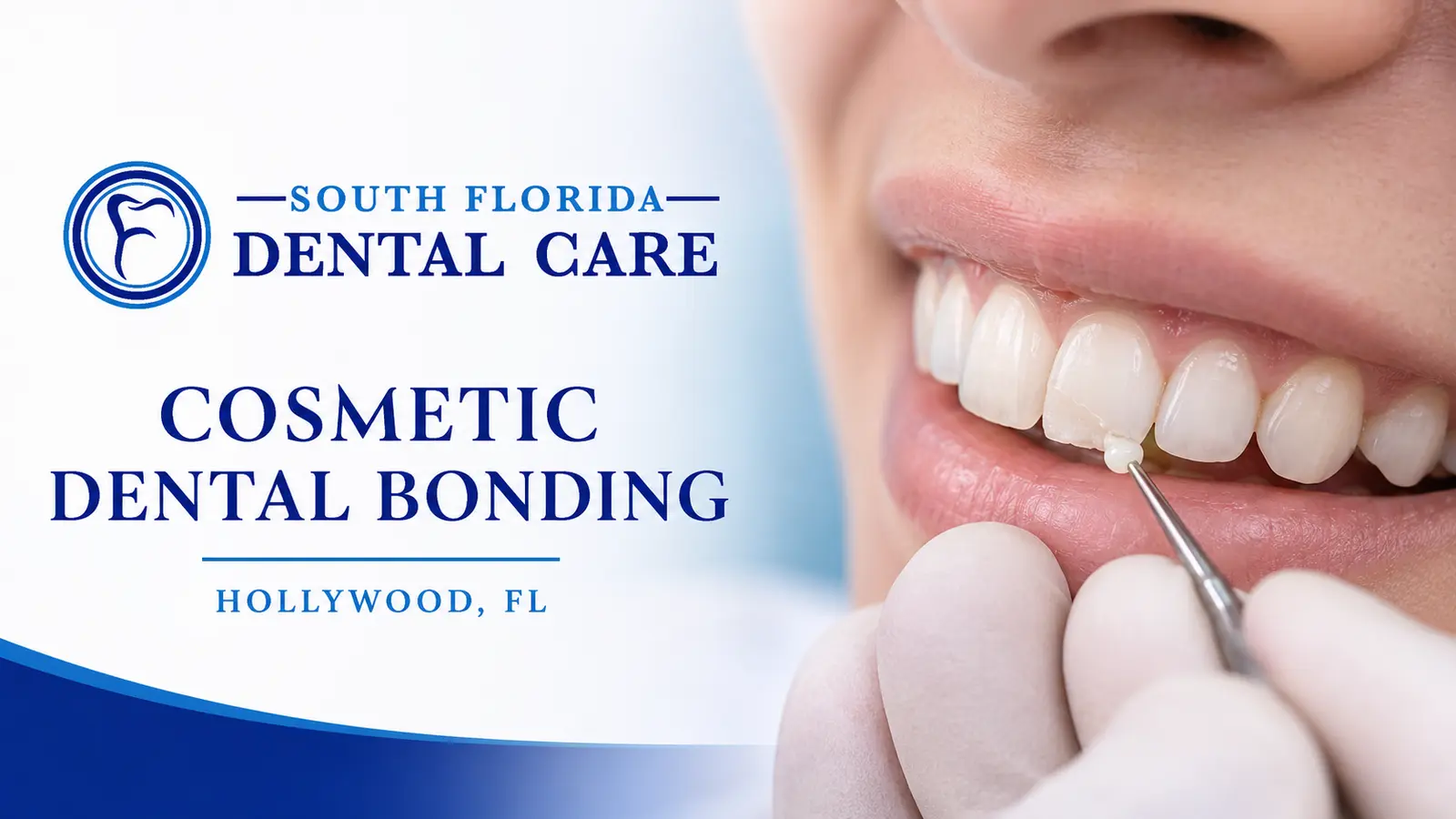
At South Florida Dental Care, our dentists provide cosmetic bonding for patients in Hollywood, Pembroke Pines, Hallandale Beach, Aventura, and surrounding communities. Each tooth is evaluated individually so that treatment addresses the concern without removing more healthy tooth structure than necessary.
Call (954) 966-6410 or request a consultation to find out whether cosmetic dental bonding is appropriate for your smile.
Dental bonding may be considered for relatively small cosmetic changes, including:
Bonding is not intended to correct every cosmetic or structural problem. A tooth with extensive decay, a large fracture, significant wear, or inadequate remaining structure may require a dental crown or another restorative treatment. More extensive changes to the color, size, shape, or alignment of several teeth may be better addressed with porcelain veneers.
Cosmetic bonding is usually completed directly on the tooth rather than being fabricated by a dental laboratory. The exact procedure depends on the condition of the tooth and the amount of material required.
Your dentist begins by selecting a composite shade that blends with the surrounding teeth. The tooth surface is prepared, and an adhesive system is applied. Tooth-colored composite resin is then placed, shaped, and carefully sculpted to create the desired contour.
A curing light hardens the material. Your dentist then refines the shape, checks how the tooth contacts the opposing teeth, and polishes the restoration so that it blends more naturally with the smile.
Many cosmetic bonding procedures can be completed in one appointment. Treatment time and the need for local anesthetic depend on the number of teeth involved and whether the tooth also requires treatment for decay or damage.
Bonding and veneers can address some of the same cosmetic concerns, but they are different treatments.
Dental bonding is placed directly on the tooth, often requires little alteration of healthy enamel, and can usually be completed during one visit. It is particularly useful for small, localized changes. However, composite resin can stain, wear, or chip over time and may require polishing, repair, or replacement.
Porcelain veneers are custom restorations made outside the mouth and bonded to the visible surfaces of selected teeth. Porcelain generally resists staining better than composite resin and may provide greater control when changing several teeth. Veneer treatment typically requires more planning and some alteration of the natural tooth.
Neither option is automatically better. The appropriate choice depends on the condition of the teeth, the extent of the desired change, bite forces, long-term expectations, and the amount of healthy tooth structure that would need to be altered.
Patients considering several treatments can learn more on our cosmetic dentistry page.
Cosmetic bonding and tooth-colored fillings use related composite materials, but their purposes are not always identical. Bonding commonly refers to material placed primarily to improve a tooth’s visible shape or appearance. A filling restores an area affected by decay or damage.
In some cases, a procedure serves both purposes by restoring damaged tooth structure while improving the tooth’s appearance. Learn more about tooth-colored restorations.
Bonding can provide a meaningful improvement, but patients should understand its limitations:
If you are considering professional teeth whitening as well as bonding, whitening is often completed first. The composite can then be matched to the final tooth shade because bonding material will not become lighter with subsequent bleaching.
Bonded teeth should be brushed and flossed as part of a consistent oral-hygiene routine. Regular dental examinations allow the dentist to check the restoration’s margins, surface, color, and contact with the opposing teeth.
Avoid biting directly into hard objects with a bonded front tooth. Patients who clench or grind their teeth may benefit from a protective appliance, depending on their individual circumstances.
Healthy teeth and gums are also important to the appearance and stability of cosmetic treatment. Active decay, gum inflammation, or uncontrolled bite problems may need to be addressed before elective bonding is completed. Learn more about maintaining your periodontal health.
A consultation is necessary to determine whether bonding can provide the improvement you want. Your dentist will evaluate the tooth, surrounding enamel, existing restorations, bite, gum health, and the amount of composite required.
When bonding is suitable, it can offer a conservative way to improve a specific tooth without committing to a more extensive restoration. When it is not suitable, your dentist can explain alternatives and the reasons another treatment may provide a more predictable result.
Learn more about the dentists at South Florida Dental Care and their approach to cosmetic and restorative treatment.
South Florida Dental Care is located at 4030 Sheridan Street, Suite B, in Hollywood, Florida. We welcome patients from Hollywood, Pembroke Pines, Hallandale Beach, Aventura, and nearby communities.
To discuss a chipped tooth, uneven edge, small space, or another cosmetic concern, call (954) 966-6410 or contact South Florida Dental Care to request an appointment.