New Patients Accepted (954) 966-6410
Professional teeth whitening can brighten natural teeth that have darkened or become more stained over time. Coffee, tea, red wine, tobacco, aging, and other factors can all affect tooth color, but the type and severity of discoloration determine how well whitening is likely to work.
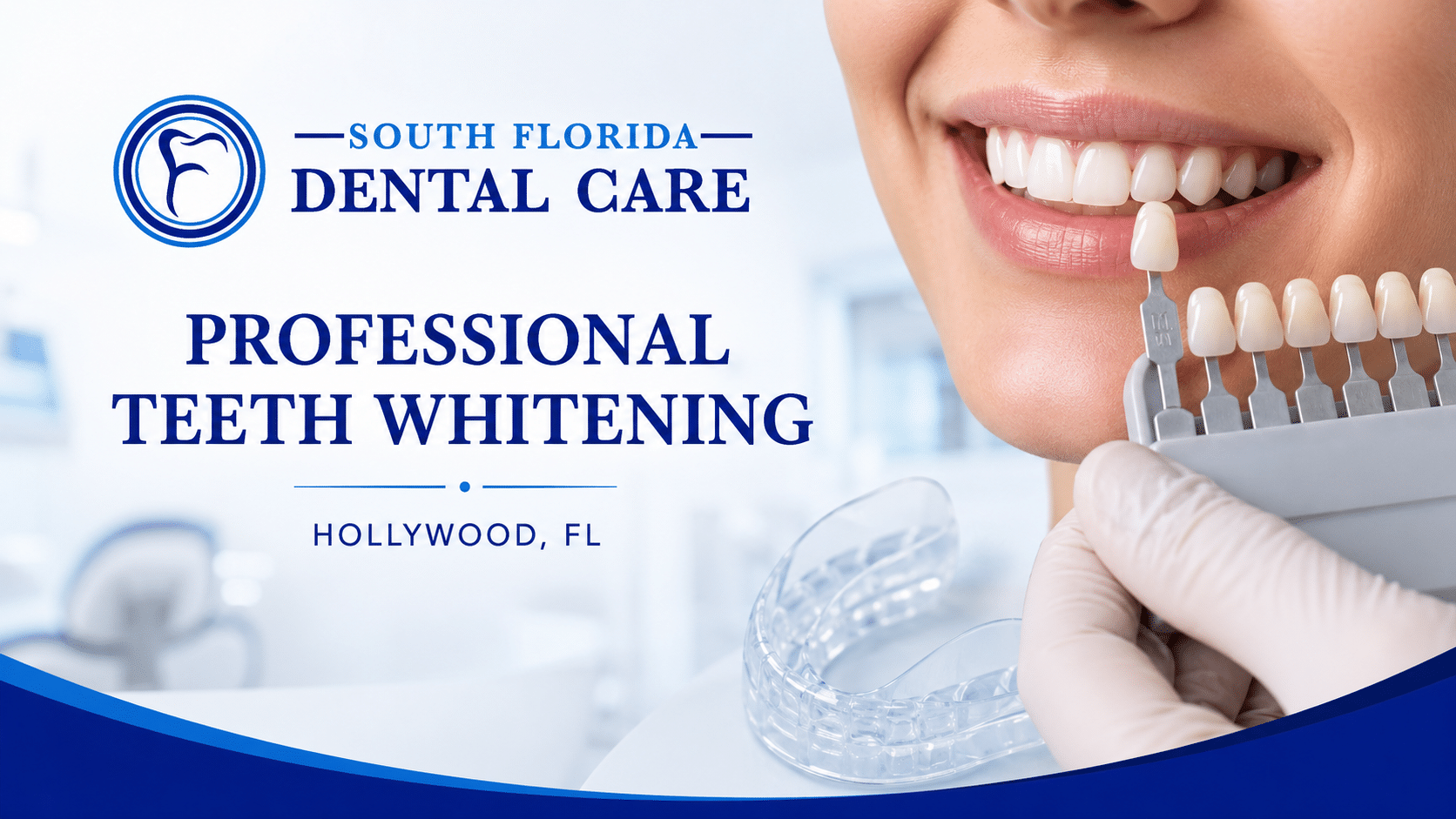 At South Florida Dental Care, we provide dentist-supervised take-home whitening for patients in Hollywood, Pembroke Pines, Hallandale Beach, Aventura, and surrounding communities. Your teeth and gums are evaluated before treatment to determine whether whitening is appropriate and to explain what you can realistically expect.
Call (954) 966-6410 or request a consultation to discuss professional teeth whitening.
Professional take-home whitening typically uses custom-fitted trays and a dentist-selected whitening gel. The trays are designed to hold the gel against the teeth while limiting unnecessary contact with the surrounding gums.
Your dentist will provide instructions for how much gel to use, how long to wear the trays, and how frequently to complete treatment. The appropriate schedule depends on the whitening product, its concentration, your existing tooth color, and whether you are prone to sensitivity.
Whitening gel usually contains hydrogen peroxide or carbamide peroxide. These ingredients penetrate the tooth structure and break down colored compounds rather than simply polishing away surface debris.
Some patients notice a change relatively early in treatment, while others require additional applications. No responsible whitening plan can guarantee an exact number of shades because teeth respond differently.
Whitening may improve discoloration associated with:
Not all discoloration responds equally. Gray coloration, significant fluorosis, tetracycline-related staining, trauma, and a single dark tooth may require additional evaluation. These conditions do not automatically rule out whitening, but the expected response may be different from that of ordinary yellow or surface-related staining.
A tooth that has recently changed color should be examined rather than treated as a purely cosmetic concern. Trauma, decay, or changes inside the tooth may require diagnosis and treatment before appearance is addressed.
A professional dental cleaning removes plaque, tartar, and certain surface stains. A cleaning may make teeth appear cleaner and brighter, but it does not bleach the natural tooth structure.
Whitening changes the shade of natural teeth through a chemical process. If plaque, tartar, gum inflammation, or substantial surface staining is present, a cleaning or other dental care may be recommended before whitening begins.
Whitening gel affects natural tooth structure. It does not lighten:
If restorations are visible when you smile, whitening the surrounding natural teeth could make a color difference more noticeable. Your dentist will assess existing dental work and discuss whether any restorations may eventually need to be polished, repaired, or replaced for a more consistent result.
When whitening is planned along with cosmetic bonding, porcelain veneers, or a new dental crown, whitening is generally completed first. This allows the final restoration to be matched to the resulting tooth shade.
Many adults with healthy, natural teeth and gums can consider professional whitening. Before recommending treatment, your dentist may evaluate:
Active decay, damaged restorations, gum disease, or another oral-health concern may need to be treated before whitening. Establishing a healthy foundation helps reduce avoidable discomfort and produces a more predictable cosmetic plan.
Learn more about the connection between gum health and cosmetic care on our periodontal health page.
Temporary tooth sensitivity is a common side effect of whitening. Some patients may also experience temporary gum irritation if the whitening gel contacts the soft tissues.
Sensitivity varies according to the individual, whitening concentration, frequency of application, and condition of the teeth. Your dentist may recommend changing the treatment schedule, using less gel, shortening application time, or using a sensitivity product when appropriate.
Persistent or severe sensitivity should not simply be ignored. It may indicate that treatment needs to be adjusted or that another dental condition should be evaluated.
For additional patient information, see the American Dental Association’s overview of teeth whitening.
Teeth whitening is not permanent. Natural aging continues, and teeth can gradually absorb new stains. The rate of color change depends on diet, tobacco use, oral hygiene, and other individual habits.
You can help maintain your results by:
Touch-up frequency should be based on your needs rather than an automatic schedule. Excessive or unsupervised whitening can increase sensitivity and gum irritation without necessarily producing a better result.
Over-the-counter strips, gels, toothpastes, and rinses vary in how they work and what they can accomplish. Whitening toothpastes primarily help remove surface stains, while peroxide-based products can change tooth color to varying degrees.
The advantage of dentist-supervised whitening is not simply the strength of the product. It includes an examination before treatment, consideration of restorations and oral health, customized instructions, and professional guidance if sensitivity or uneven results develop.
If you are considering an over-the-counter product, discuss it with your dentist and look for products carrying the American Dental Association Seal of Acceptance.
Whitening changes tooth color but does not alter tooth shape, position, proportion, surface texture, or structural condition. If the primary concern involves a chip, worn edge, uneven shape, substantial internal discoloration, or multiple cosmetic issues, another treatment may be more appropriate.
Depending on the concern, alternatives may include:
Visit our cosmetic dentistry page for an overview of treatments that can address tooth color, shape, proportion, damage, and missing teeth.
South Florida Dental Care is located at 4030 Sheridan Street, Suite B, in Hollywood, Florida. We welcome patients from Hollywood, Pembroke Pines, Hallandale Beach, Aventura, and nearby communities.
To find out whether professional take-home whitening is appropriate for your teeth, call (954) 966-6410 or contact South Florida Dental Care to request an appointment.