New Patients Accepted (954) 966-6410
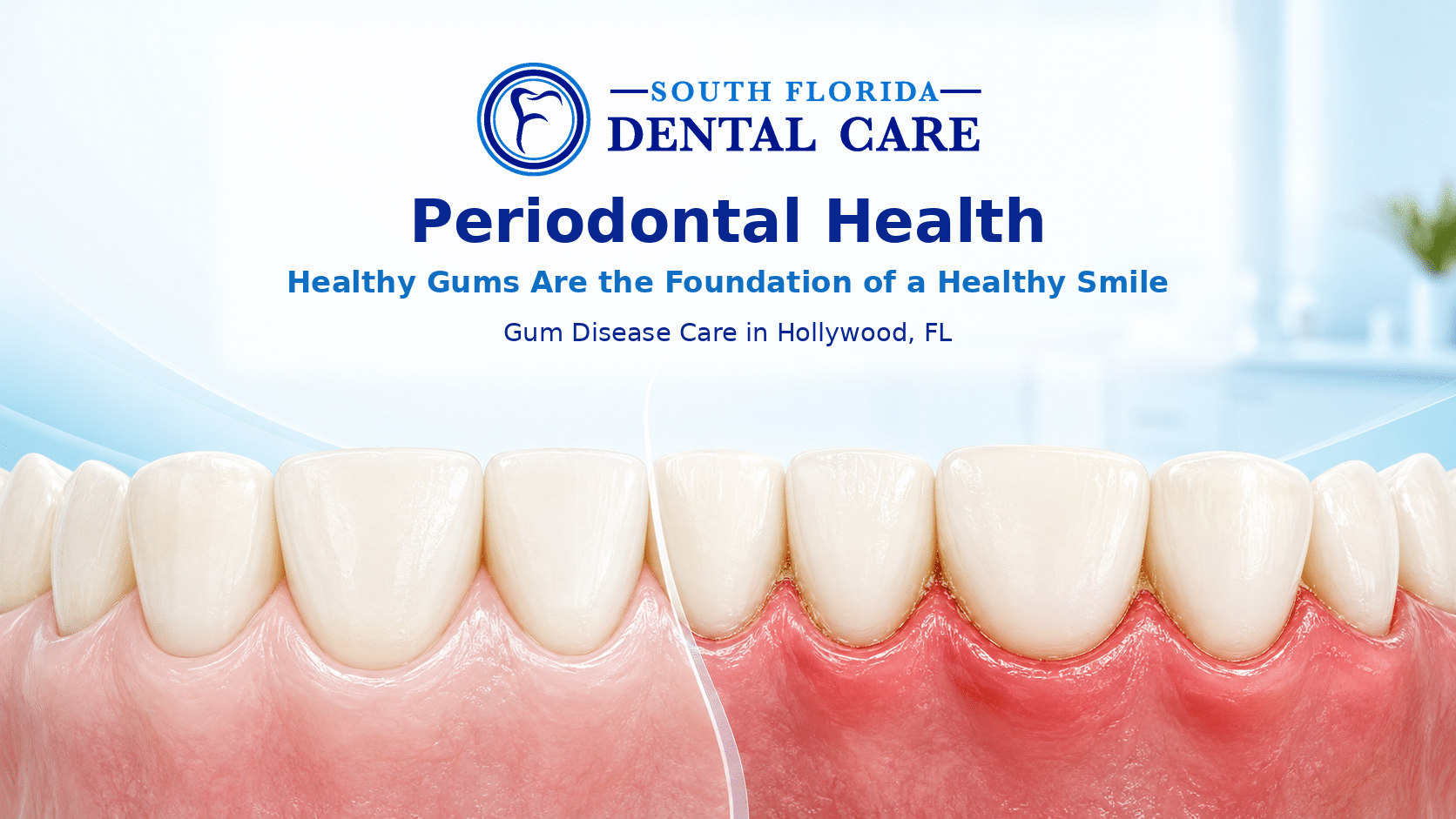
Healthy gums provide the foundation for healthy teeth, comfortable chewing, and long-lasting dental work. Gum disease can begin with mild inflammation and occasional bleeding, but it may progress to damage the bone and tissues that support the teeth if it is not identified and treated.
South Florida Dental Care provides periodontal evaluations, preventive care, and personalized gum disease treatment for patients in Hollywood, Pembroke Pines, Hallandale Beach, Aventura, and surrounding South Florida communities. Our dentists and dental hygienists evaluate your gums as part of your overall oral health rather than treating gum health as a separate concern.
If you have bleeding, swollen, or receding gums, call (954) 966-6410 or contact South Florida Dental Care to request an appointment.
Periodontal disease, commonly called gum disease, affects the gums and other tissues that surround and support the teeth. It usually begins when plaque accumulates around the gumline. If plaque is not removed effectively, it may harden into tartar, which requires professional removal.
Bacteria and the body’s inflammatory response can cause the gums to become red, swollen, tender, or prone to bleeding. As the condition progresses, spaces known as periodontal pockets may develop between the teeth and gums. These pockets can collect additional bacteria and become difficult to clean through normal brushing and flossing.
According to the Centers for Disease Control and Prevention, periodontal diseases involve inflammation and infection of the gums and bone surrounding the teeth. Although gum disease is common, it is largely preventable and treatable.
Read more about what periodontal disease is and how it affects your oral health.
Gum disease is often discussed as a single condition, but gingivitis and periodontitis represent different stages of the disease.
Gingivitis is inflammation limited primarily to the gums. Common signs include redness, swelling, tenderness, bad breath, and bleeding during brushing or flossing.
At this stage, the bone and connective tissues supporting the teeth have not been permanently damaged. Gingivitis can often be reversed with professional dental care and improved daily plaque control.
Periodontitis is a more advanced form of gum disease involving damage to the tissues and bone supporting the teeth. The gums may pull away from the teeth, periodontal pockets may deepen, and supporting bone may be lost.
Bone loss caused by periodontitis does not simply grow back when the gums stop bleeding. Treatment focuses on controlling the infection and inflammation, preserving the remaining support, and establishing a maintenance program that reduces the likelihood of continued disease progression.
The American Academy of Periodontology provides additional patient information about gingivitis, periodontitis, and the importance of professional treatment.
Gum disease does not always cause pain, especially during its earlier stages. That makes regular periodontal evaluations important even when your mouth feels normal.
Possible warning signs include:
Bleeding gums should not be dismissed as a normal result of brushing or flossing. Although occasional irritation can occur, recurrent bleeding may indicate inflammation that warrants evaluation.
Plaque accumulation is a primary factor in gum disease, but several health, lifestyle, and genetic considerations can influence a person’s risk and the rate at which the disease progresses.
Risk factors may include:
Having one or more risk factors does not necessarily mean that you will develop advanced gum disease. It may mean that you need more frequent monitoring, additional preventive support, or a more individualized home-care routine.
A periodontal evaluation looks at more than whether your gums bleed. Our dental team evaluates the relationship among your teeth, gums, supporting bone, existing restorations, home care routine, and overall health.
Your evaluation may include:
These findings help determine whether your gums are healthy, whether gingivitis is present, or whether there are signs of periodontitis requiring more extensive care.
Current periodontal classification uses four stages to describe the severity and complexity of periodontitis. The stage is based on clinical findings, which may include attachment loss, bone loss, tooth loss caused by periodontal disease, pocket depth, tooth mobility, and the complexity of managing the condition.
Stage I represents early periodontitis. Initial loss of supporting tissue has occurred, but the damage is relatively limited. Early diagnosis and treatment can help prevent further progression.
Stage II represents moderate periodontitis with more established loss of supporting tissues. Treatment and consistent periodontal maintenance are important for controlling the condition.
Stage III involves severe periodontal damage and may include deeper pockets, more substantial bone loss, tooth mobility, or tooth loss related to gum disease. Treatment may be more complex and may involve coordination with a periodontal specialist.
Stage IV represents advanced periodontal disease that threatens the stability and function of the dentition. Patients may experience significant tooth mobility, bite changes, difficulty chewing, or the need for extensive restorative planning.
Periodontitis may also be assigned a grade—A, B, or C—to help describe the expected rate of progression and the influence of risk factors. Staging and grading require a professional clinical evaluation and cannot be determined from symptoms alone.
Visit our page about the stages of periodontal disease for additional information.
Treatment depends on whether you have gingivitis or periodontitis, the severity and location of the disease, your risk factors, and how your gums respond to initial care. There is no single treatment plan that is appropriate for every patient.
When inflammation is limited to gingivitis, a professional cleaning may be recommended to remove plaque and tartar from the teeth. Consistent brushing, cleaning between the teeth, and regular preventive visits are necessary to keep the inflammation from returning.
Scaling and root planing is a nonsurgical treatment that removes plaque and tartar from above and below the gumline. Root surfaces are carefully cleaned to help the gum tissue heal and make it easier to maintain the area.
Treatment may be completed in sections of the mouth, depending on the extent of the disease and the patient’s comfort. Local anesthetic may be used when appropriate.
After initial periodontal treatment, the gums need time to respond. A follow-up evaluation may include measuring periodontal pockets again, checking for bleeding, and determining whether inflammation has improved.
Patients who have been treated for periodontitis may need periodontal maintenance visits more frequently than patients receiving routine preventive cleanings. These visits are designed to disrupt bacterial buildup, monitor previously affected areas, and identify signs of renewed disease activity.
More advanced or complex periodontal disease may require treatment by a periodontist. A periodontist is a dentist with additional specialty training in preventing, diagnosing, and treating periodontal disease.
If specialist care is appropriate, we can explain why it is recommended and coordinate treatment as part of your broader dental care plan.
Learn more about the prevention and treatment of periodontal disease.
Healthy gums are essential before, during, and after many restorative dental procedures. Inflammation, active infection, or inadequate bone support may affect the comfort, appearance, stability, and longevity of dental work.
Periodontal health is particularly important when planning or maintaining:
For example, crowns and bridges require healthy supporting teeth and gums that can be cleaned effectively. Dental implants also require healthy gum tissue and adequate supporting bone. Periodontal evaluation is, therefore, an important part of comprehensive treatment planning.
Researchers have identified associations between periodontal disease and several systemic health conditions. These relationships are complex because periodontal disease and systemic conditions may share risk factors such as age, tobacco use, inflammation, genetics, and diabetes.
Studies have found an association between periodontal disease and cardiovascular disease. However, an association does not establish that gum disease directly causes heart disease or that periodontal treatment will prevent a heart attack or stroke. The American Dental Association’s heart disease and oral health guidance explains this distinction.
Diabetes and gum disease have a particularly important relationship. People with diabetes may face a higher risk of periodontal disease, especially when blood sugar is not well controlled. Periodontal inflammation may also make diabetes management more difficult for some patients.
Pregnancy-related hormonal changes can make the gums more susceptible to inflammation. Pregnant patients should continue appropriate dental care and tell their dentist about their pregnancy, medications, and recommendations from their obstetric healthcare provider.
Read more about the relationship between periodontal health and cardiovascular health.
Daily plaque control and professional dental care work together to help prevent gingivitis and reduce the risk of periodontal disease progression.
Helpful steps include:
Our dental hygiene services support prevention, early identification, and long-term maintenance of healthy teeth and gums.
Use the following resources to learn more about gum disease and its management:
Bleeding, swollen, or receding gums may be signs that your periodontal health needs attention. Because gum disease may progress without significant pain, regular dental examinations are also important when you do not have obvious symptoms.
South Florida Dental Care provides periodontal evaluations and personalized treatment recommendations for patients in Hollywood and surrounding South Florida communities. Our team will explain what we find, discuss appropriate treatment options, and help you understand how to maintain your gums after treatment.
You can also learn more about our complete dental services and meet our Hollywood dentists.
Call (954) 966-6410 or contact South Florida Dental Care to request an appointment.