New Patients Accepted (954) 966-6410
Full mouth rehabilitation is a coordinated treatment-planning process for patients with several worn, damaged, failing, or missing teeth. It is not one standardized procedure, and it does not mean that every tooth must automatically receive a crown.
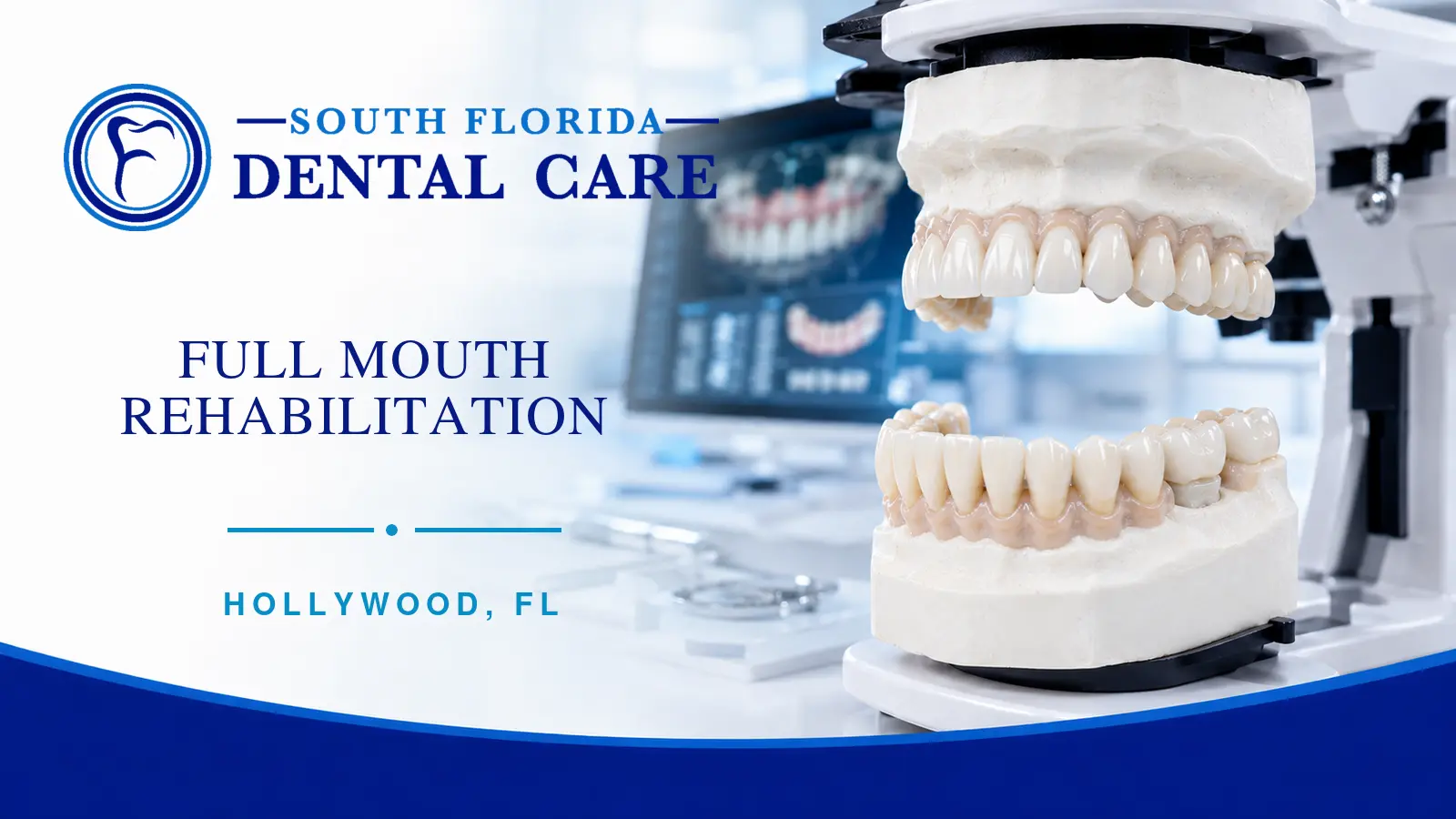
At South Florida Dental Care, treatment begins by identifying which teeth can be preserved, which conditions must be stabilized, how missing teeth affect the bite, and what combination of procedures may provide a predictable result. The plan may involve restorative, implant, periodontal, and cosmetic treatment completed in an appropriate sequence.
If multiple dental problems are affecting your comfort, chewing, appearance, or ability to maintain your teeth, call South Florida Dental Care at (954) 966-6410 or request a comprehensive dental evaluation.
Full mouth rehabilitation, also called full mouth reconstruction, refers to rebuilding or replacing multiple teeth across the upper jaw, lower jaw, or both. The objective is to create a healthier, more functional dental system rather than treating each damaged tooth in isolation, without considering its relationship to the rest of the mouth.
The American College of Prosthodontists describes full-mouth reconstruction as treatment that rebuilds or replaces the teeth while integrating restorative science with aesthetic considerations.
A rehabilitation plan may involve several different procedures, but only the treatment appropriate for the individual patient should be included. Some patients need extensive care throughout the mouth. Others may need coordinated treatment in only one arch or several specific areas.
A comprehensive evaluation may be appropriate when several dental conditions are present simultaneously. These may include:
Symptoms such as jaw discomfort, tooth sensitivity, muscle fatigue, or recurring fractures can have several possible causes. Full mouth rehabilitation should not be presented as an automatic solution for headaches or jaw pain. Those concerns require an appropriate diagnosis before treatment is recommended.
The goals of treatment depend on the patient’s condition, but they may include:
Appearance is an important part of many rehabilitation plans, but treatment should not be designed around appearance alone. The health of the teeth and gums, the amount of remaining tooth structure, the bite, and long-term maintenance requirements all affect the plan.
Complex restorative treatment should begin with a thorough evaluation rather than an assumption that every tooth needs treatment. Your dentist will discuss your concerns, dental history, previous treatment, medical considerations, and what you hope to accomplish.
The evaluation may include:
These records help the dentist determine what caused the damage, what conditions are still active, and which treatment options are reasonable. Without addressing the underlying cause, new restorations may be exposed to the same forces or disease that damaged the original teeth.
One of the most important decisions in full mouth rehabilitation is determining which teeth can be preserved. A tooth should not be removed simply because it requires treatment, but preservation is not always predictable when very little healthy structure remains or when the supporting tissues are severely compromised.
Depending on the condition of an individual tooth, treatment may involve a tooth-colored restoration, a porcelain onlay or overlay, or a custom dental crown.
The smallest restoration is not automatically the most conservative choice if it leaves a weakened tooth at risk of another fracture. Likewise, a crown should not be used automatically when a more limited restoration can provide adequate support. Each tooth must be evaluated individually and as part of the complete treatment plan.
Missing teeth may affect chewing, speech, appearance, neighboring teeth, and the distribution of forces throughout the mouth. When a tooth cannot be predictably maintained, the plan should also address whether and how it will be replaced.
Options may include:
No single replacement option is appropriate for every patient. The number and location of missing teeth, condition of neighboring teeth, available bone, periodontal health, medical history, maintenance requirements, treatment time, and patient priorities all influence the decision.
Full mouth rehabilitation may combine several types of treatment. The final plan is based on clinical need and may include:
Healthy gums and supporting bone provide the foundation for restorative care. Active inflammation or periodontal disease may need to be stabilized before definitive restorations are placed. Learn more about our approach to periodontal health.
Teeth with limited or moderate damage may not require full coverage. Fillings, inlays, onlays, or overlays may preserve more healthy structure when the remaining tooth can support them.
Crowns may be recommended for teeth with extensive structural damage, large failing restorations, fractures, or insufficient support for a more limited restoration. Crown materials are selected according to the tooth’s location, visibility, strength requirements, and role within the bite.
Bridges and implant restorations can replace missing teeth, but they use different types of support. A bridge relies on neighboring teeth or implants, while an implant restoration is supported by an implant placed in the jawbone. The condition of the mouth and the patient’s priorities determine which options to consider.
A partial or complete denture may replace several missing teeth and can sometimes provide a practical alternative to extensive fixed or implant treatment. Fit, support, stability, maintenance, and expectations should be discussed before treatment begins.
Cosmetic dentistry may be incorporated when tooth color, shape, proportion, or visible wear is a patient’s concern. Depending on the condition, treatment may involve cosmetic bonding, porcelain veneers, or professional teeth whitening.
Cosmetic procedures should be coordinated with restorative treatment. For example, whitening may need to occur before new porcelain restorations are shade-matched.
A full-mouth rehabilitation rarely follows a single universal schedule. The number of visits and total treatment time depend on the conditions being treated and the procedures included.
A coordinated plan may proceed through several phases:
Urgent concerns, active decay, infection, gum inflammation, or teeth that cannot be maintained may need to be addressed first. This creates a healthier foundation for later restorative treatment.
Models, scans, photographs, bite records, or provisional restorations may be used to evaluate proposed changes before definitive treatment is completed. Temporary restorations can also protect prepared teeth and provide information about appearance and function.
Definitive restorations are completed in the sequence established by the treatment plan. Some procedures may be performed together, while others require healing or reassessment before the next stage.
After treatment, the bite, restorations, gum health, comfort, and access to home care are evaluated. Long-term professional maintenance is essential because restored teeth and dental implants still require regular monitoring.
A smile makeover is usually driven primarily by cosmetic concerns involving visible teeth. Full mouth rehabilitation is generally broader and is used when several dental problems affect health, structure, chewing, or bite stability.
The two approaches can overlap. A rehabilitation plan may improve the smile, and cosmetic considerations are important when restoring visible teeth. However, the need for treatment should be based on the condition of the mouth and the patient’s functional requirements—not a promise of a standardized cosmetic transformation.
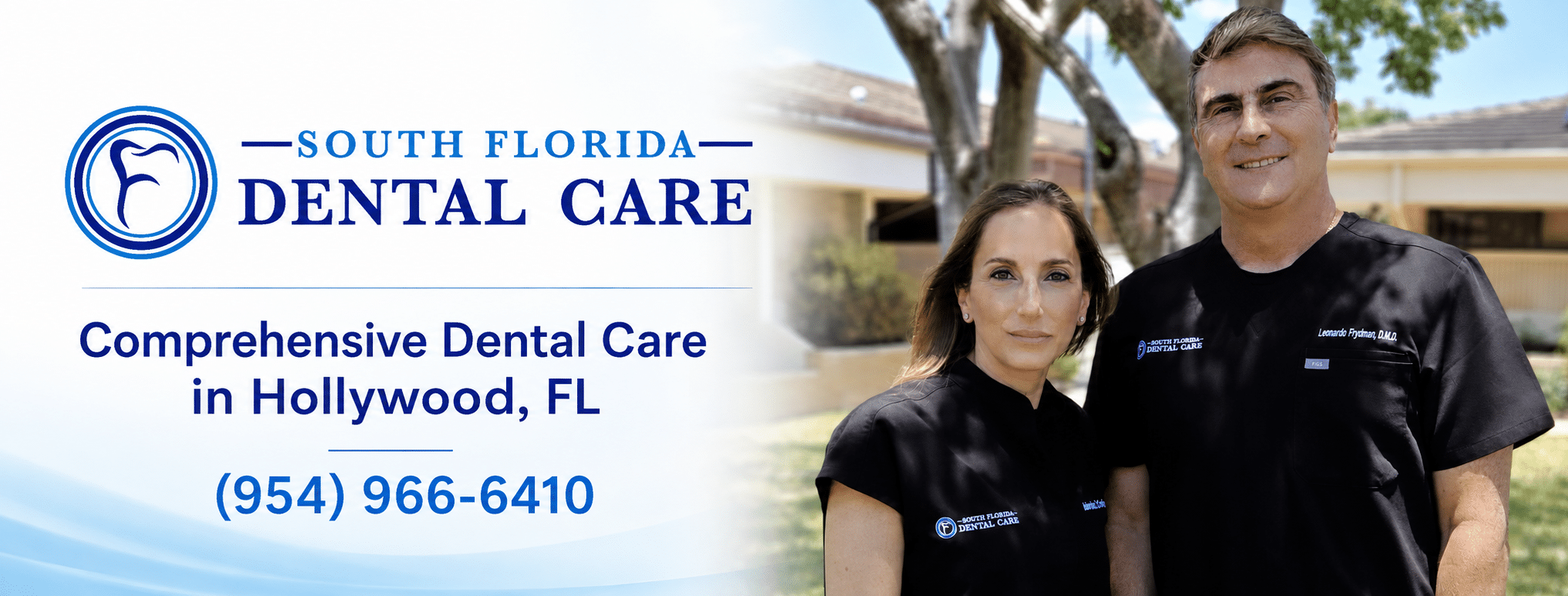
Dr. Leonardo Frydman is a prosthodontist with advanced education in restoring and replacing teeth. Prosthodontic training emphasizes diagnosis, comprehensive treatment planning, dental materials, occlusion, crowns, bridges, dentures, implant restorations, and the coordination of complex restorative care.
This perspective is especially relevant when several treatments must function together. The objective is not simply to restore individual teeth, but to plan how the complete result will work within the patient’s mouth.
Dr. Gabriela Cohen provides general, restorative, and cosmetic dentistry with a conservative approach to preserving healthy tooth structure. The dentists and clinical team coordinate care according to the patient’s needs and treatment plan.
Learn more about both dentists on our Meet Our Doctors page.
Full-mouth rehabilitation can improve many complex dental conditions, but it cannot eliminate all risks. Teeth can still develop decay, gum disease can recur, porcelain can fracture, and implants and restorations require continuing maintenance.
Patients who grind or clench may place substantial force on both natural teeth and restorations. A protective appliance may be recommended, but it must be worn as directed to provide protection.
Medical conditions, medications, smoking, dry mouth, oral hygiene, diet, and the condition of the supporting bone and gums may affect treatment options and prognosis. These factors should be discussed before treatment begins.
Long-term maintenance is part of the treatment, not an optional final step. Patients should brush with fluoride toothpaste, clean between the teeth and around restorations every day, and attend professional examinations and cleanings at the recommended interval.
The maintenance schedule depends on the type of restorations, history of decay or periodontal disease, implant care needs, and individual risk factors. Contact the office if a restoration feels loose, the bite changes, a tooth becomes persistently sensitive, or an appliance no longer fits properly.
No. Treatment is based on the condition of each tooth. Some teeth may need crowns, while others may be treated with fillings, onlays, veneers, or no restorative treatment. Missing teeth may require bridges, implants, or removable options.
The timeline varies according to the number of teeth involved, the treatments selected, healing requirements, laboratory procedures, and whether the plan includes periodontal or implant care. It should not be assumed that every case can be completed in three visits.
No. Implants are one possible method of replacing missing teeth. Bridges, removable partial dentures, complete dentures, or preservation of existing teeth may be appropriate in other cases.
It may be appropriate when multiple teeth have lost substantial structure through grinding, erosion, fractures, or other causes. The source of the wear must be evaluated so the treatment plan can address ongoing risk factors.
Cosmetic dentistry primarily focuses on the appearance of teeth and the smile. Full mouth rehabilitation is generally used when several dental conditions affect oral health, structure, chewing, or bite function, although appearance is also considered.
There is no standard fee because the term refers to a customized treatment plan rather than a single procedure. Cost depends on the number of teeth involved, the treatments selected, materials, laboratory work, and whether surgical or implant treatment is required. A written plan can be developed after the examination and diagnostic process.
If several worn, damaged, failing, or missing teeth are affecting your oral health, comfort, function, or appearance, South Florida Dental Care can evaluate the conditions and explain the available options.
Our office is located at 4030 Sheridan Street, Suite B, Hollywood, FL 33021. We welcome patients from Hollywood, Emerald Hills, Pembroke Pines, Hallandale Beach, Aventura, and surrounding communities.
Call (954) 966-6410 or request a comprehensive dental evaluation online.