Vaping is sometimes described as a harmless alternative to smoking, but an e-cigarette does not produce simple water vapor. It creates an aerosol that may contain nicotine, flavoring chemicals, ultrafine particles, metals, and other substances that come into direct contact with the teeth, gums, tongue, and other tissues inside the mouth.
Researchers are still studying the long-term effects because e-cigarettes are relatively new compared with conventional cigarettes. Current evidence does not support treating vaping as harmless, however—especially for teenagers, young adults, pregnant women, and people who have never used tobacco.
At South Florida Dental Care, patients can discuss vaping, smoking, nicotine use, dry mouth, bleeding gums, or other concerns without judgment. Accurate information helps our dentists and hygienists evaluate changes in oral health and recommend appropriate care.
If you have noticed changes in your teeth or gums, call South Florida Dental Care at (954) 966-6410 or request an appointment at our Hollywood dental office.
What Is Actually in E-Cigarette Aerosol?
E-cigarettes heat a liquid to produce an aerosol that the user inhales. The devices are also called vapes, vape pens, electronic nicotine delivery systems, or ENDS.
According to the Centers for Disease Control and Prevention, most e-cigarettes contain nicotine. Depending on the product, the aerosol may also contain cancer-causing chemicals, volatile organic compounds, ultrafine particles, flavoring chemicals, and metals such as nickel, tin, and lead.
The exact ingredients and concentrations can vary considerably between devices and liquids. That variability is one reason a dentist cannot determine someone’s individual oral-health risk solely from the word “vaping.” Frequency, nicotine exposure, product composition, oral hygiene, diet, medical history, and the condition of the teeth and gums all matter.
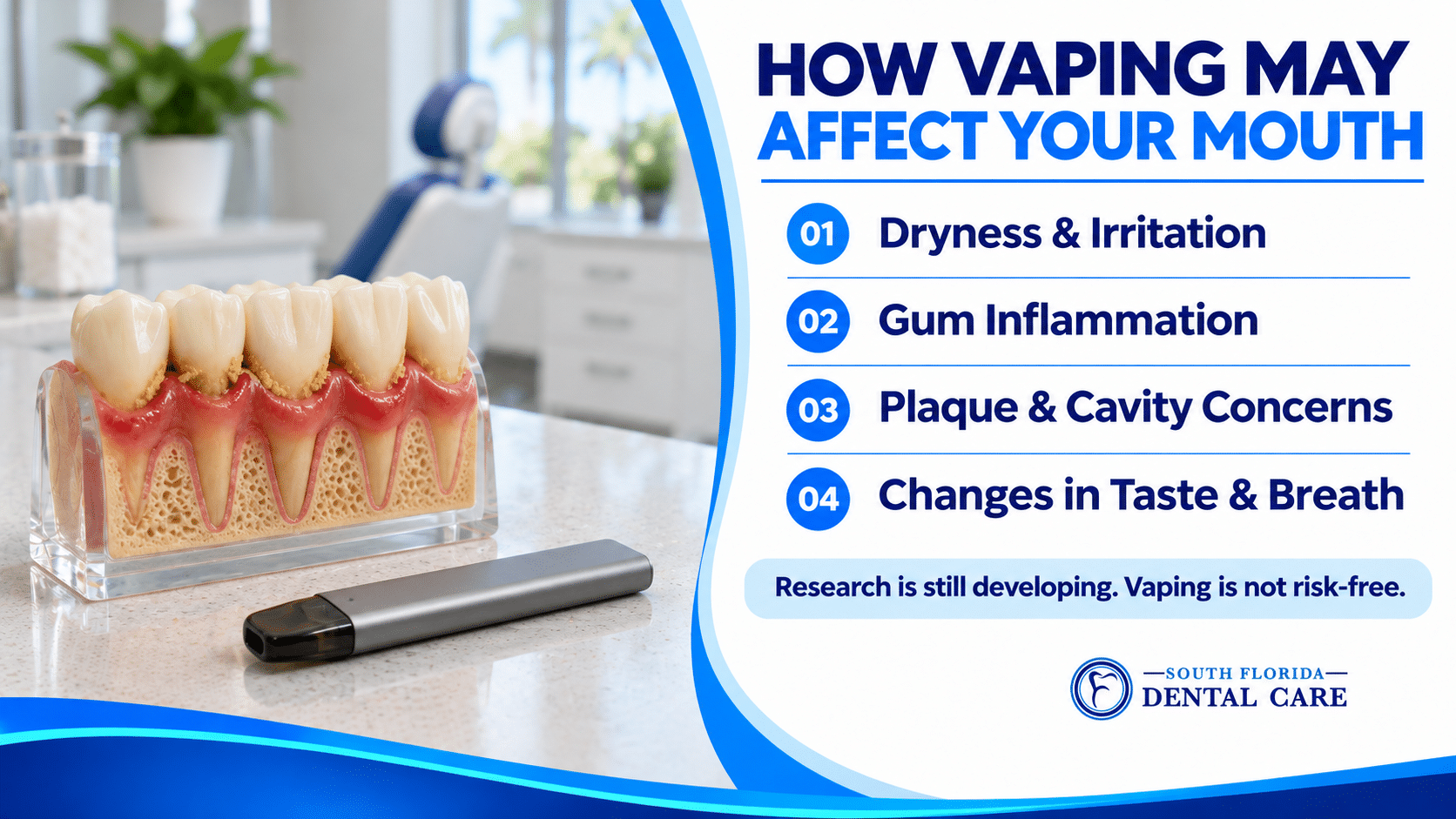
How Vaping May Affect Your Mouth
The mouth is one of the first areas exposed to e-cigarette aerosol. Effects can differ from person to person, and some people may not notice obvious symptoms. Several areas remain important to monitor.
Dry Mouth
People who use e-cigarettes have reported dryness, burning, irritation, unpleasant taste, bad breath, and oral discomfort. The U.S. Food and Drug Administration includes these among the oral effects associated with direct exposure to e-liquids and e-cigarette use.
Saliva helps wash away food particles, neutralize acids, control bacteria, and protect tooth enamel. When the mouth remains dry, plaque and acids may stay in contact with the teeth longer. Persistent dry mouth can therefore increase the risk of cavities, bad breath, sensitivity, and oral irritation.
Sipping water may temporarily relieve dryness, but it does not remove the underlying exposure or replace an oral-health evaluation when symptoms continue.
Gum Inflammation and Periodontal Concerns
Research into vaping and gum disease is continuing. Current studies suggest that e-cigarette use may affect inflammation, the tissues surrounding the teeth, and the community of microorganisms living inside the mouth.
An NIH-supported study of the oral microbiome found that the bacterial communities of e-cigarette users differed from those of nonsmokers and more closely resembled those found in conventional smokers. These changes may be linked to an increased risk of gum disease, although more research is needed to understand the long-term clinical effects.
Possible warning signs include:
- Red, swollen, or tender gums
- Bleeding while brushing or cleaning between the teeth
- Persistent bad breath or an unpleasant taste
- Gum recession
- Sensitivity near the gumline
- Loose teeth or changes in the bite
These symptoms are not unique to vaping and do not establish its cause. They do indicate that the gums and supporting tissues should be evaluated.
Plaque and Cavity Risk
The FDA reports that e-cigarette aerosols may adhere to exposed oral surfaces, including the teeth, gums, tongue, and dental implants. That residue may also make it easier for bacteria to adhere. Some flavored or sweetened liquids may add to the concern.
The American Dental Association’s MouthHealthy resource notes that researchers have found an association between vaping and untreated cavities, but the available research has not established that vaping directly caused those cavities.
Dry mouth, frequent intake of sugary or acidic drinks, inadequate plaque removal, existing enamel damage, and infrequent professional care can also increase risk. A dental examination is needed to identify whether decay is present and what may be contributing to it.
Oral Irritation and Changes in Taste
Some people who vape report burning, soreness, irritation, altered taste, or discomfort involving the tongue, cheeks, gums, or throat. These symptoms may be temporary, but persistent changes should not simply be assumed to be a normal consequence of vaping.
Contact a dentist if you develop a sore, irritated area, lump, color change, unexplained pain, or other oral change that does not resolve. An exam can help distinguish minor irritation from an infection, dental condition, or other problem that needs attention.
Can Vaping Affect Dental Treatment or Healing?
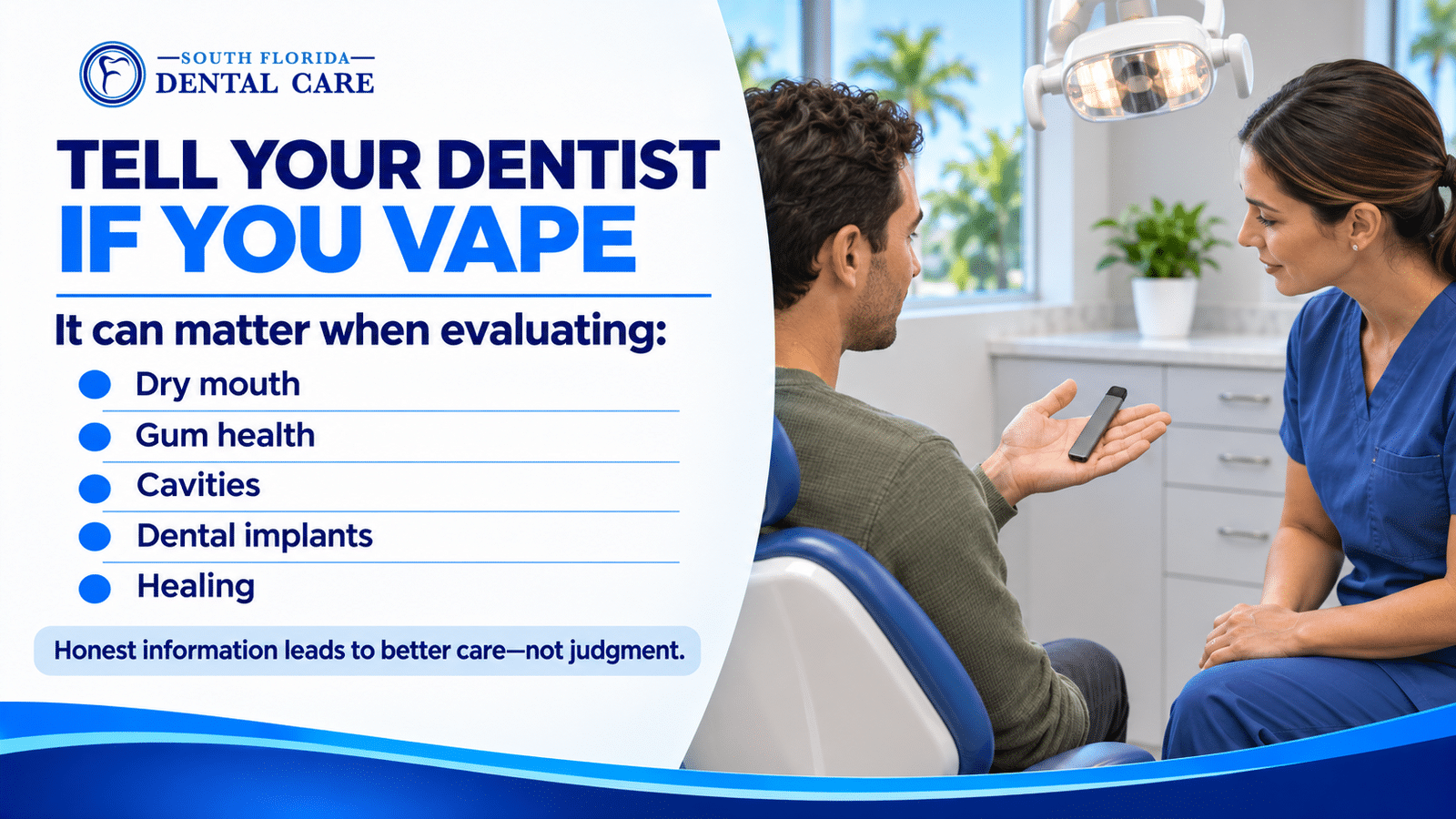
Your dentist should know if you vape, smoke, use smokeless tobacco, or use another nicotine product. This information is especially relevant when evaluating gum disease or planning an extraction, implant procedure, periodontal treatment, or another procedure that requires healing.
Nicotine and tobacco exposure can affect blood flow, inflammation, gum health, and healing. The effects vary by product and individual, and evidence specifically addressing every type of vaping product and dental procedure remains limited.
Sharing this information does not automatically prevent you from receiving treatment. It allows the dentist to evaluate risk more accurately, discuss realistic expectations, and determine whether additional monitoring or timing changes may be appropriate.
Is Vaping Safer Than Smoking Cigarettes?
This question requires context. The FDA states that e-cigarettes can generally represent a lower-risk alternative for an adult who currently smokes cigarettes and switches completely. That does not mean vaping is safe or beneficial for oral health.
Important distinctions include:
- People who do not currently smoke or use tobacco should not begin vaping.
- Youth, young adults, and pregnant women should not use e-cigarettes.
- Using both cigarettes and e-cigarettes does not provide the same potential reduction in exposure as switching completely.
- No e-cigarette has been approved by the FDA as a smoking-cessation medication.
- The long-term oral and systemic effects of vaping are still being studied.
The goal should not be to label one product harmless. It should be to understand the person’s current nicotine or tobacco use and identify an evidence-based path toward reducing and ultimately ending that exposure.
How to Protect Your Teeth and Gums if You Vape
Good home care cannot make vaping risk-free, but it still helps limit other preventable dental problems.
- Brush twice daily with fluoride toothpaste.
- Clean between your teeth daily with floss or another recommended interdental cleaner.
- Drink water regularly, especially if your mouth feels dry.
- Limit frequent sugary and acidic drinks.
- Do not ignore bleeding gums, sores, persistent dryness, bad breath, or changes in taste.
- Keep the dental examination and hygiene schedule recommended for your individual oral health.
- Tell your dentist and hygienist about vaping, smoking, and other nicotine products.
- Ask a healthcare professional to help you develop a plan to quit.
Professional care is not identical for every patient. Someone with healthy gums may need a different schedule from a patient with dry mouth, active decay, gum disease, dental implants, or a history of periodontal treatment. Learn more about dental hygiene and preventive care at South Florida Dental Care.
Getting Help to Quit Vaping
Nicotine is highly addictive, and quitting may take more than one attempt. Patients should not feel embarrassed about asking for help.
A dentist can discuss how vaping may be affecting the mouth, reinforce the benefits of quitting, and coordinate with the patient’s physician or another healthcare professional when appropriate. National resources are also available through Smokefree.gov and by calling 1-800-QUIT-NOW.
If you currently smoke cigarettes, speak with a qualified healthcare professional before deciding how to quit. A personalized cessation plan can account for nicotine dependence, medical history, prior attempts, and available FDA-approved treatments.
Frequently Asked Questions About Vaping and Dental Health
Can a dentist tell whether someone vapes?
A dentist may observe dry mouth, inflammation, irritation, decay, or other findings sometimes associated with vaping, but those conditions can have many causes. An examination alone cannot always prove that a patient vapes. Telling the dental team about nicotine and tobacco use allows for a more accurate evaluation.
Does vaping cause cavities?
Research has found an association between vaping and untreated cavities, and laboratory findings suggest that certain aerosols may encourage bacterial adhesion to teeth. Current evidence does not establish that vaping directly causes every cavity. Dry mouth, diet, oral hygiene, fluoride exposure, and existing dental conditions also influence risk.
Can vaping cause bleeding gums?
Bleeding gums can signal gingivitis or more advanced periodontal disease. Studies suggest vaping may affect gum inflammation and the oral microbiome, but bleeding can also result from plaque buildup, brushing technique, medications, hormonal changes, and other conditions. Recurrent bleeding should be evaluated rather than attributed to a single cause.
Is nicotine-free vaping safe for teeth and gums?
Removing nicotine does not necessarily make an e-cigarette aerosol harmless. Other ingredients, flavorings, particles, and chemicals may still contact the teeth and oral tissues. Product contents also vary, so a nicotine-free label does not answer every oral-health concern.
Should I tell my dentist that I vape?
Yes. Vaping and other nicotine use may be relevant when evaluating dry mouth, gum health, cavities, oral irritation, dental implants, and healing. The information helps your dental team provide appropriate recommendations and is not a reason to avoid care.
Schedule a Dental Evaluation in Hollywood, Florida
If you vape and have noticed dry mouth, bleeding gums, bad breath, sensitivity, irritation, or changes in your teeth, an examination can help identify what is happening. Evaluate symptoms based on clinical findings rather than assumptions about their cause.
South Florida Dental Care provides preventive, restorative, periodontal, implant, and cosmetic dental care at one Hollywood office. We welcome patients from Hollywood, Emerald Hills, Pembroke Pines, Hallandale Beach, Aventura, and nearby South Florida communities.
Call South Florida Dental Care at (954) 966-6410 or request an appointment online.