GLP-1 medications such as Ozempic, Wegovy, Rybelsus, Mounjaro, and Zepbound have become widely used for diabetes management, weight management, and other approved medical purposes. As their use has increased, so have online discussions about “Ozempic teeth,” “Ozempic mouth,” and changes in breath or taste.
These phrases can be misleading. No formally recognized dental condition is called “Ozempic teeth,” and current evidence does not show that GLP-1 medications directly destroy teeth. However, some people experience dry mouth, nausea, vomiting, acid reflux, dehydration, altered taste, or changes in eating habits while using these medications. Those effects can indirectly influence the teeth, gums, and other oral tissues.
You should not stop or change a prescribed medication because of dental symptoms without speaking with the healthcare professional who prescribed it. Your dentist can evaluate the effects in your mouth, recommend ways to reduce oral-health risks, and coordinate with your medical team when necessary.
If you are experiencing dry mouth, sensitivity, enamel changes, or other dental concerns while taking a GLP-1 medication, call South Florida Dental Care at (954) 966-6410 or request an appointment online.
What Are GLP-1 Medications?
GLP-1 receptor agonists are medications that act on pathways involved in blood-sugar regulation, appetite, and digestion. They may increase insulin release when appropriate, reduce glucagon secretion, promote fullness, and slow how quickly food leaves the stomach.
Examples of GLP-1 and related medications include:
- Semaglutide, sold under brand names including Ozempic, Wegovy, and Rybelsus
- Tirzepatide, sold as Mounjaro and Zepbound
- Liraglutide, sold as Victoza and Saxenda
- Dulaglutide, sold as Trulicity
These medications do not all have the same ingredients, approved uses, doses, or potential effects. Tirzepatide, for example, acts on both GIP and GLP-1 receptors. Patients should follow the instructions provided by their prescribing clinician and pharmacist for the specific medication they use.
Are “Ozempic Teeth” a Real Condition?
“Ozempic teeth” is an informal internet expression rather than an established diagnosis. People have used it to describe several concerns, including dry mouth, bad breath, increased sensitivity, tooth decay, enamel erosion, and gum changes.
These problems should not automatically be blamed on one medication. Tooth decay and gum disease have multiple possible causes, and patients taking GLP-1 medications may also have diabetes, take other medications, experience dietary changes, or have preexisting dental conditions.
A 2026 review of the emerging research on semaglutide and oral health identified dry mouth and altered oral sensation among the effects being reported and studied. The authors also emphasized that the oral side-effect profile is still not fully characterized.
The appropriate conclusion is not that every GLP-1 user will develop dental problems. Instead, patients and dental professionals should recognize possible changes early and manage the specific risk factors that are present.
How Could GLP-1 Medications Affect Oral Health?
Dry Mouth and Reduced Saliva Protection
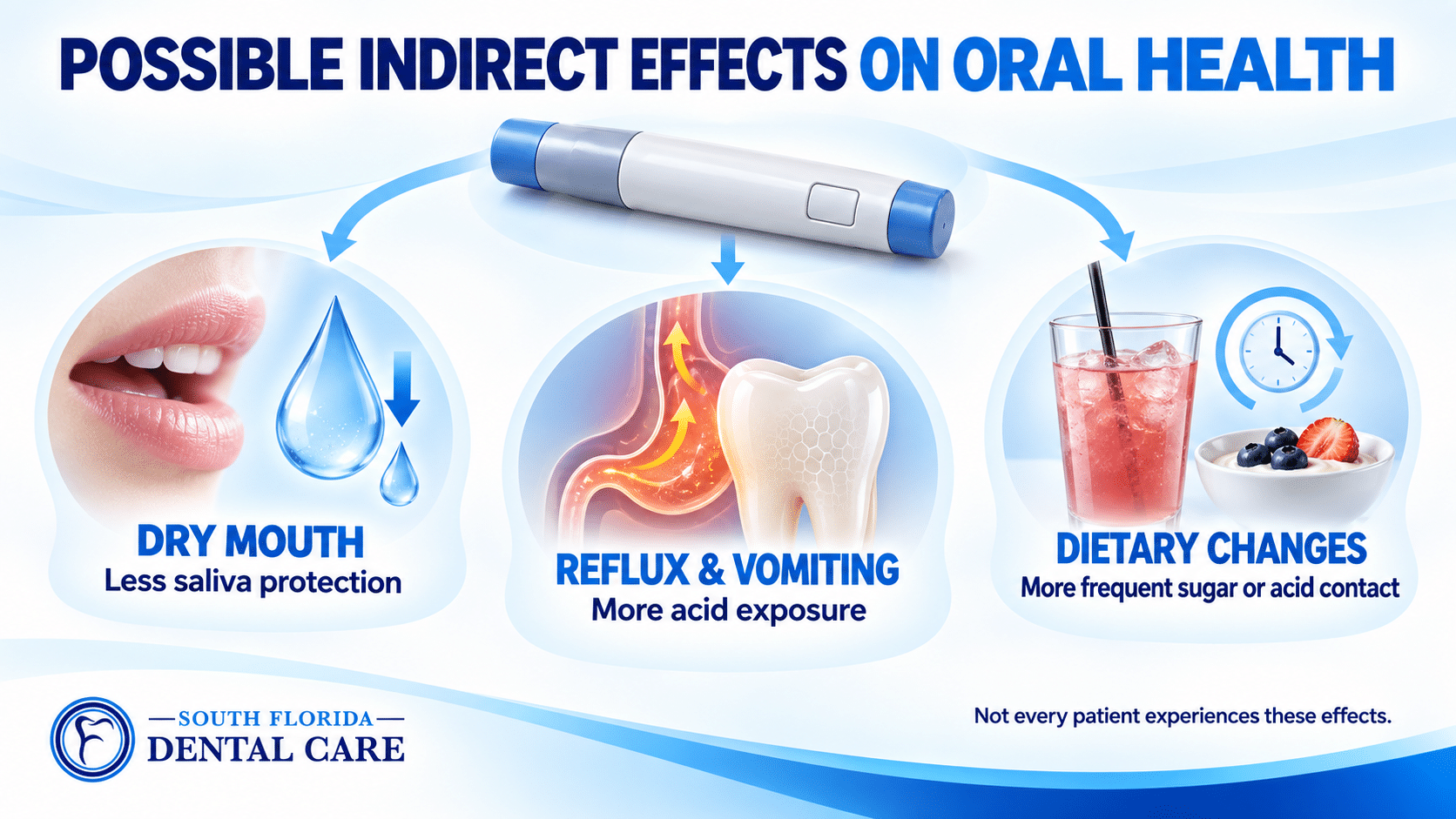
Dry mouth is one of the most relevant concerns for dental health. It may develop or worsen because of medication effects, dehydration, reduced fluid intake, nausea, vomiting, or the combined effects of several medications.
Saliva does much more than keep the mouth comfortable. It helps:
- Wash food particles and sugars away from the teeth
- Neutralize acids
- Support remineralization of the enamel surface
- Lubricate the lips, tongue and other oral tissues
- Make chewing, swallowing and speaking easier
- Control some of the microorganisms living in the mouth
When saliva protection is reduced, a patient may face increased risks of tooth decay, enamel demineralization, sensitivity, mouth sores and oral infections. Dry mouth can also make dentures or other removable dental appliances less comfortable.
The American Dental Association includes GLP-1 receptor agonists among medications that may contribute to or worsen oral dryness. However, dry mouth has many possible causes, and not every person using a GLP-1 medication will experience it.
Patients with persistent symptoms can learn more in our guide to dry mouth and oral health.
Nausea, Vomiting, Reflux and Tooth Erosion
Nausea and vomiting are among the recognized gastrointestinal effects of certain GLP-1 medications. Some patients may also experience indigestion, belching, or gastroesophageal reflux.
Repeated contact with stomach acid can soften and gradually dissolve protective enamel. This process is known as tooth erosion. Possible signs include:
- Increased sensitivity to hot, cold, or sweet foods
- Yellowing as the enamel becomes thinner
- Smooth, rounded, or transparent tooth edges
- Cupped areas on chewing surfaces
- Changes in the shape or length of teeth
- Teeth that chip more easily
If vomiting occurs, rinse gently with plain water afterward. Avoid brushing immediately because acid temporarily softens the enamel surface. Waiting approximately one hour gives saliva time to clear the acid and allows the enamel surface to re-harden before brushing.
Discuss recurring vomiting, reflux, or an acidic taste with the prescribing medical professional. Dental care can help protect the teeth, but the underlying gastrointestinal symptoms may require medical evaluation.
Bad Breath and Changes in Taste
Some patients taking semaglutide or another GLP-1-based medication report bad breath, a dry or coated tongue, or changes in taste. Some people describe these experiences online as “Ozempic breath” or “Ozempic tongue,” but those terms don’t identify a specific medical condition.
Possible contributors include:
- Reduced saliva flow
- Changes in food and fluid intake
- Reflux or belching
- Vomiting
- Changes in digestion
- Plaque or debris accumulating on the tongue
- Existing tooth decay or gum disease
If bad breath continues despite brushing, flossing, tongue cleaning, and hydration, have it evaluated. A dentist can look for dry mouth, gum inflammation, cavities, infections, and other oral causes rather than assuming the medication is the only cause.
Changes in Eating and Drinking Habits
Many people change how and what they consume after beginning a GLP-1 medication. Smaller meals may be helpful medically, but some new habits can affect the teeth.
Examples include:
- Sipping sweetened protein drinks throughout the day
- Using acidic electrolyte or flavored beverages for hydration
- Frequently consuming gummy vitamins or supplements
- Sucking on sugary candies to manage an unpleasant taste
- Eating small carbohydrate-containing snacks repeatedly
- Drinking more citrus-flavored beverages because plain water is less appealing
The frequency of exposure matters. Sipping an acidic or sugary drink repeatedly can expose your teeth more often than drinking the same beverage once with a meal.
Water is generally the best routine hydration choice for dental health. If you use nutritional drinks or supplements, your dentist can help you consider how their sugar content, acidity, texture, and frequency may affect your mouth without interfering with the dietary plan your medical team provides.
Gum Health
Current evidence does not establish that GLP-1 medications directly cause gum disease. Plaque control, smoking, diabetes, genetics, dry mouth, existing inflammation, and many other factors influence periodontal health.
Improved blood-sugar control may benefit oral health for some patients with diabetes, while dry mouth, vomiting, dietary changes or inconsistent oral hygiene may create different risks. Research into the relationship between GLP-1-based treatment and periodontal health is continuing.
Do not dismiss bleeding, swollen, or tender gums as a normal medication effect. These symptoms may indicate gingivitis or periodontal disease and should be evaluated through a periodontal examination.
Signs You Should Discuss With Your Dentist
Tell your dentist if you develop any of the following after beginning a medication or changing your dose:
- Persistent dry or sticky feeling in the mouth
- Difficulty chewing or swallowing dry foods
- New sensitivity to hot, cold, sweet, or acidic foods
- Frequent bad breath or an unusual taste
- A dry, sore, or burning tongue
- Mouth sores or cracks at the corners of the lips
- Bleeding or swollen gums
- New cavities or rapid changes in existing dental work
- Repeated vomiting, reflux, or an acidic taste
- Teeth that appear thinner, yellower, smoother, or more transparent
The timing of these symptoms matters, especially if they began after starting treatment or increasing the medication dose. Bring an updated medication list to your dental appointment, including the medication name, dose, and schedule.
How to Protect Your Teeth and Gums While Taking a GLP-1 Medication
The appropriate recommendations depend on your symptoms and medical needs, but the following measures may help protect your oral health:
- Drink water regularly unless a medical professional has instructed you to limit fluids.
- Brush gently twice daily with fluoride toothpaste.
- Clean between the teeth daily with floss or another recommended interdental cleaner.
- Use a soft-bristled toothbrush to avoid unnecessary abrasion.
- Gently clean the tongue if coating or bad breath develops.
- Choose sugar-free gum or mints when appropriate instead of sugary candy.
- Avoid alcohol-containing mouthwash if it worsens oral dryness.
- Limit repeated exposure to sweetened, carbonated, or acidic beverages.
- Rinse with water after vomiting or reflux and wait before brushing.
- Avoid acidic candies or lemon products to stimulate saliva.
- Keep regular dental examinations and professional cleanings.
Patients with significant dry mouth or increased cavity risk may benefit from professional fluoride treatments, prescription-strength fluoride toothpaste, saliva substitutes, or other individualized preventive measures. Select these products based on the patient’s condition rather than adding them automatically.
Tell Your Dentist Before Sedation or a Dental Procedure
GLP-1 medications can slow stomach emptying. This is particularly important when a procedure involves deep sedation or general anesthesia because food remaining in the stomach may increase the risk of regurgitation and aspiration.
Current FDA prescribing information instructs patients to tell healthcare professionals about GLP-1 use before planned procedures involving anesthesia or deep sedation. The American Society of Anesthesiologists also advises patients to discuss these medications with the procedural and anesthesia teams.
Most patients do not automatically need to stop their GLP-1 medication before every procedure. Recommendations may depend on the medication, dose, timing, recent dose increases, gastrointestinal symptoms, procedure type, and sedation level.
Before receiving sedation dentistry or another procedure requiring special fasting instructions:
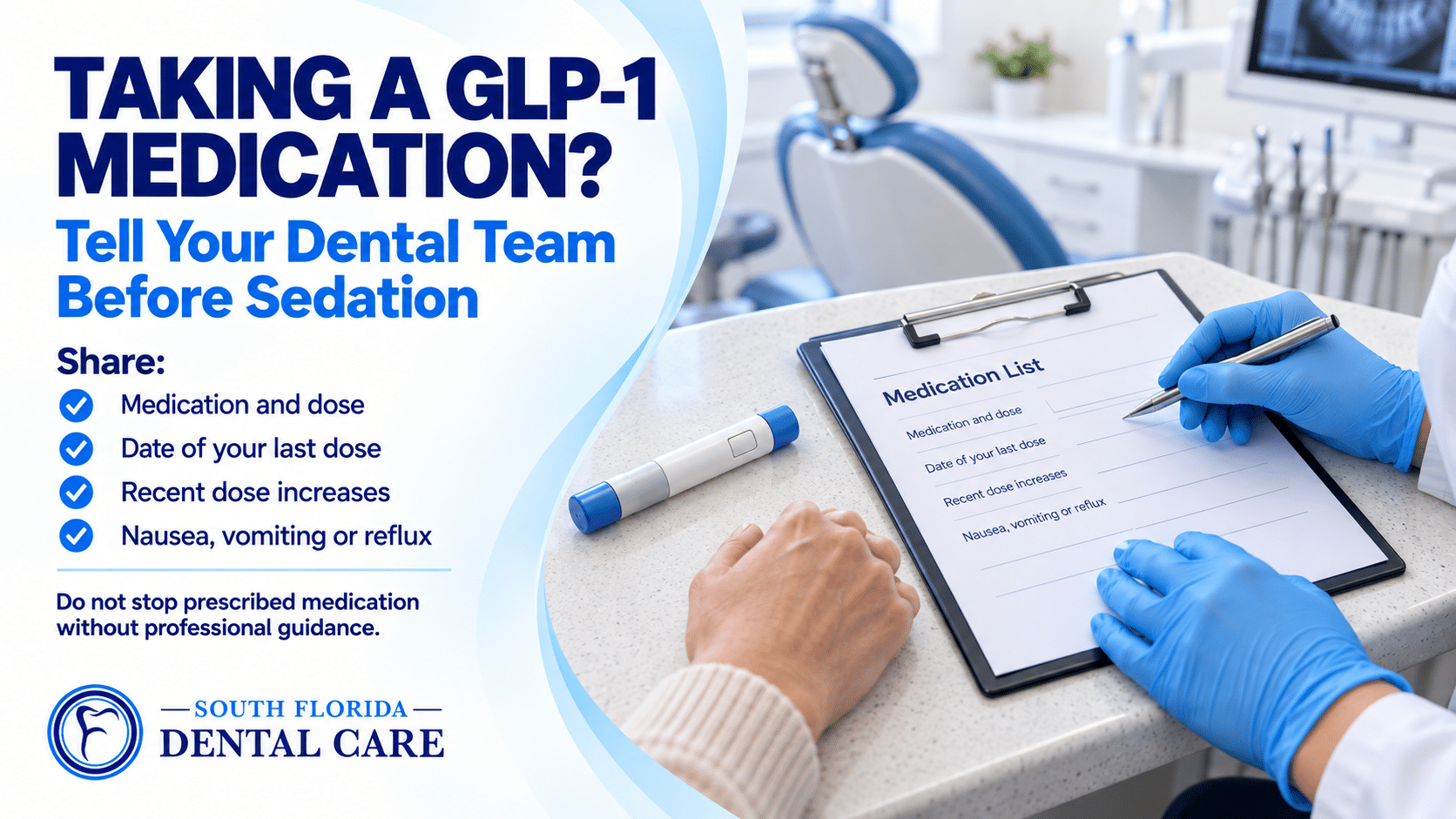
- Tell the dental team which GLP-1 medication you use.
- Provide the dose and the date or time of your most recent dose.
- Report nausea, vomiting, abdominal discomfort, reflux or constipation.
- Follow the specific eating and drinking instructions provided for your procedure.
- Do not withhold or change the medication unless instructed by the appropriate healthcare professionals.
Advance communication gives the dentist, prescribing clinician, and anesthesia professional time to determine the safest plan for your individual situation.
When Should You Contact Your Prescribing Clinician?
Contact the clinician managing your medication if you experience persistent vomiting, difficulty maintaining hydration, severe gastrointestinal symptoms, or other medical concerns. Your dentist should not independently change a medication prescribed for diabetes, weight management, or another medical condition.
When symptoms affect both your medical and dental health, communication between providers may be helpful. The medical clinician can evaluate the medication and systemic symptoms, while the dentist can assess dry mouth, enamel damage, tooth decay, gum health, and other oral effects.
Frequently Asked Questions
Can Ozempic or another GLP-1 medication make your teeth fall out?
Current evidence does not show that GLP-1 medications directly cause teeth to fall out. Untreated tooth decay, advanced gum disease, severe dry mouth, and repeated acid exposure can damage teeth, but these conditions have multiple possible causes and require a dental evaluation.
Can GLP-1 medications cause dry mouth?
Dry mouth has been reported with GLP-1 receptor agonists and may also occur indirectly through dehydration, nausea, vomiting, or reduced food and fluid intake. Not every patient experiences it. Discuss persistent dryness with both the dentist and prescribing clinician.
Can vomiting while taking a GLP-1 medication damage tooth enamel?
Repeated vomiting exposes teeth to stomach acid and can contribute to permanent enamel erosion. Rinse with water afterward, avoid brushing immediately, and tell the prescribing clinician if vomiting continues.
Should I stop taking my GLP-1 medication before dental treatment?
Do not stop or alter a prescribed medication on your own. Routine dental care may not require any medication change. Procedures involving deep sedation or general anesthesia require advance discussion because GLP-1 medications can delay stomach emptying. Follow the individualized instructions from your dental, medical, and anesthesia professionals.
What should I tell my dentist about my GLP-1 medication?
Provide the medication name, dose, dosing schedule, and timing of your most recent dose. Also report recent dose increases and symptoms such as nausea, vomiting, reflux, constipation, abdominal discomfort, dry mouth, or altered taste.
Protecting Your Oral Health During GLP-1 Treatment
GLP-1 medications provide important benefits for many patients, and taking one does not mean that dental problems are inevitable. Awareness, hydration, consistent oral hygiene, and regular dental care can help identify and manage potential risks before they become more serious.
South Florida Dental Care can evaluate dry mouth, sensitivity, enamel erosion, cavities, gum inflammation, and other concerns while working within the treatment plan your medical provider establishes.
Our office is located at 4030 Sheridan Street, Suite B, Hollywood, FL 33021. We welcome patients from Hollywood, Emerald Hills, Pembroke Pines, Hallandale Beach, Aventura, and surrounding South Florida communities.
Call South Florida Dental Care at (954) 966-6410 or request an appointment online.
This article provides general dental information and is not a substitute for advice from the clinician who prescribed your medication. Do not stop or change a prescription medication without professional guidance.